Product Description
This process is commonly known as the
Lost Wax Casting Process. It got its name because of the fact that ancient Egyptians used it to make gold jewelry hence the name Investment. Very intricate shapes with high accuracy can be made in this process.
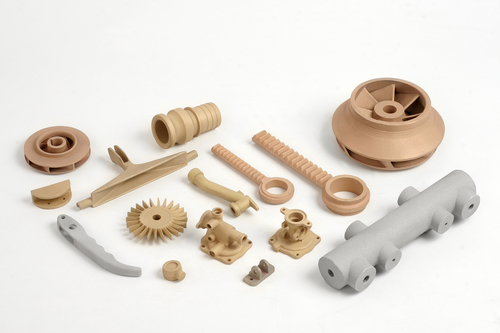
Additionally, metals which are hard to machine or fabricate can be cast with this process. Parts that cannot be produced otherwise by normal manufacturing processes like turbine blades with complex shapes, or airplane parts that need to withstand high temperatures are examples of this process.
(A) The pattern assembly is covered with ceramic to produce a monolithic mold
(B) Melting the assembly for a precise mold cavity; firing the mold to remove residues of the pattern; developing the bond and preheating the mold ready for casting; pouring
(C) Finally knockout, cutoff and finishing processes.
The process works like this first a mold is made by making a pattern. Wax or some other materials can be used that can be melted away. The wax pattern is dipped in the refractory slurry, which coats the wax pattern and skin is subsequently formed. It is then dried. The process of dipping in the slurry and drying is continued till a film thickness is achieved. The pattern is placed in an oven and the wax melted. This leads to a mold which can be easily filled with the molten metal.
The wax pattern can be made by a duplicating process using a stereolithography or a similar model that has been fabricated by a computerized solid model master.
The slurry materials used are a mixture of plaster of Paris, a binder and, a refractory material. Powdered silica is used for low-temperature melts. For higher temperature melts, an alumina-silicate is used as the refractory material. While silica is used as a binder. Additional coatings of sillimanite and ethyl silicate may be applied to increase the quality of the finished product. The mold thus produced is ready for use as light castings. It may be reinforced by placing it in a bigger container and adding more slurry.
Before the pouring operation, the mold is pre-heated at about 1000C (1832F) to remove traces of wax. Pouring can be done in gravity, pressure or vacuum conditions. Mold permeability factor is to be kept in mind when using pressure, to allow the air to escape as the pouring is made.
Features of Investment Casting:
- Allows undercuts in the pattern
- Tolerances of 0.5 % of length are possible, and for small dimensions, it can be as low as 0.15%.
- The weight of the castings can range from a few grams to 220 kgs.
- Minimum wall thicknesses are about 3 mm per Shape and Size of Component.
- Parts do not require machining because of the closer tolerances.
- Smooth surface finish.
- Excellent production rates, particularly for small components
- Thorough dimensional accuracy and consistency
- High integrity castings
- Machining can be eliminated
- Minimal shot blast and grinding needed
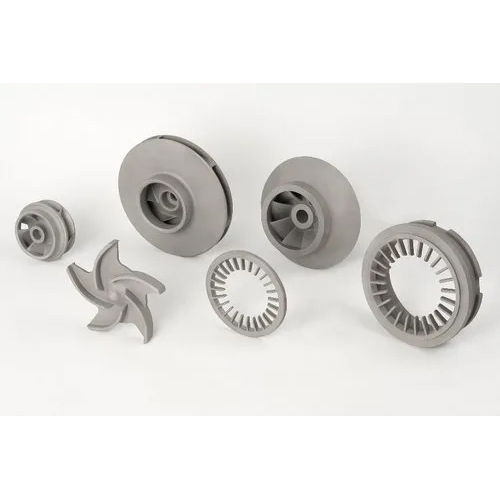
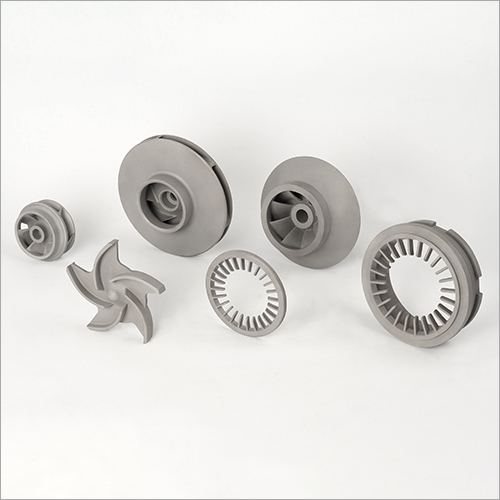
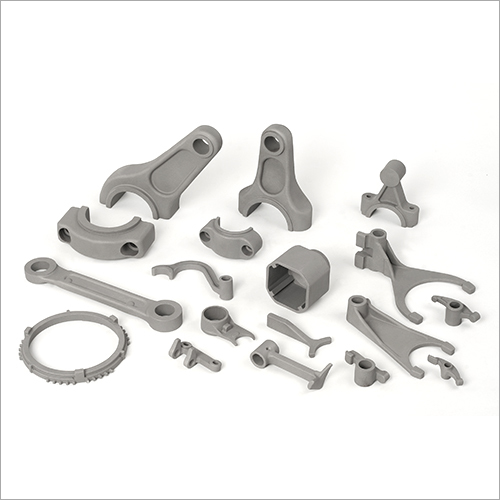
Advanced Manufacturing for Industrial ExcellencePrecision investment casting offers exceptional accuracy and consistency, making it perfect for demanding industrial use. We employ advanced techniques to achieve fine detail and superior mechanical properties in steel castings, meeting the diverse needs of our global clientele. Our expertise ensures each component maintains structural integrity while minimizing material waste.
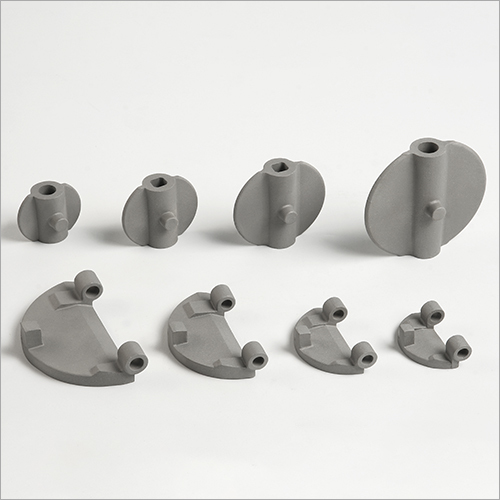
Quality and Finishing That Stand OutEvery casting undergoes rigorous inspections and is finished with a polished surface, yielding a visually striking grey sheen and optimal protection. This meticulous focus on detail not only facilitates smoother integration into machinery but also enhances the durability of your equipment in harsh working environments.
FAQs of Precision Investment Casting:
Q: How is the precision investment casting process conducted for steel components?
A: The process starts by creating a wax pattern, which is coated with a ceramic shell. Once the shell hardens, the wax is melted away and molten steel is poured into the mold. After cooling, the ceramic shell is removed, resulting in a polished, dimensionally accurate steel part.
Q: What industries commonly use your steel investment castings?
A: Our steel precision castings are widely used in various industrial sectors including automotive, heavy machinery, construction equipment, and power generation, owing to their strength, reliability, and precise tolerances.
Q: When are precision investment castings the preferred choice in manufacturing?
A: Precision investment casting is ideal when intricate shapes, minimal machining, and tight tolerances are necessary, especially for medium-weight parts ranging from 1 to 20 kilograms in industrial applications.
Q: Where are your precision investment castings manufactured and exported from?
A: All our precision investment steel castings are manufactured in our state-of-the-art facilities in India, from where we export and supply to clients across the globe.
Q: What benefits do polished surfaces provide for steel investment castings?
A: A polished surface enhances corrosion resistance, reduces friction, and improves the aesthetic appeal of the component, adding to the longevity and functional efficiency of the casting.
Q: How can precision investment casting enhance the performance of industrial machinery?
A: By delivering accurate and high-strength components, our castings ensure better fitting and operational efficiency, enabling machinery to perform reliably in rigorous environments.








 English
 Spanish
 French
 German
 Italian
 Chinese (Simplified)
 Japanese
 Korean
 Arabic
 Portuguese

 Send Inquiry
 Send Inquiry
 Send SMS
 Call Me Free